
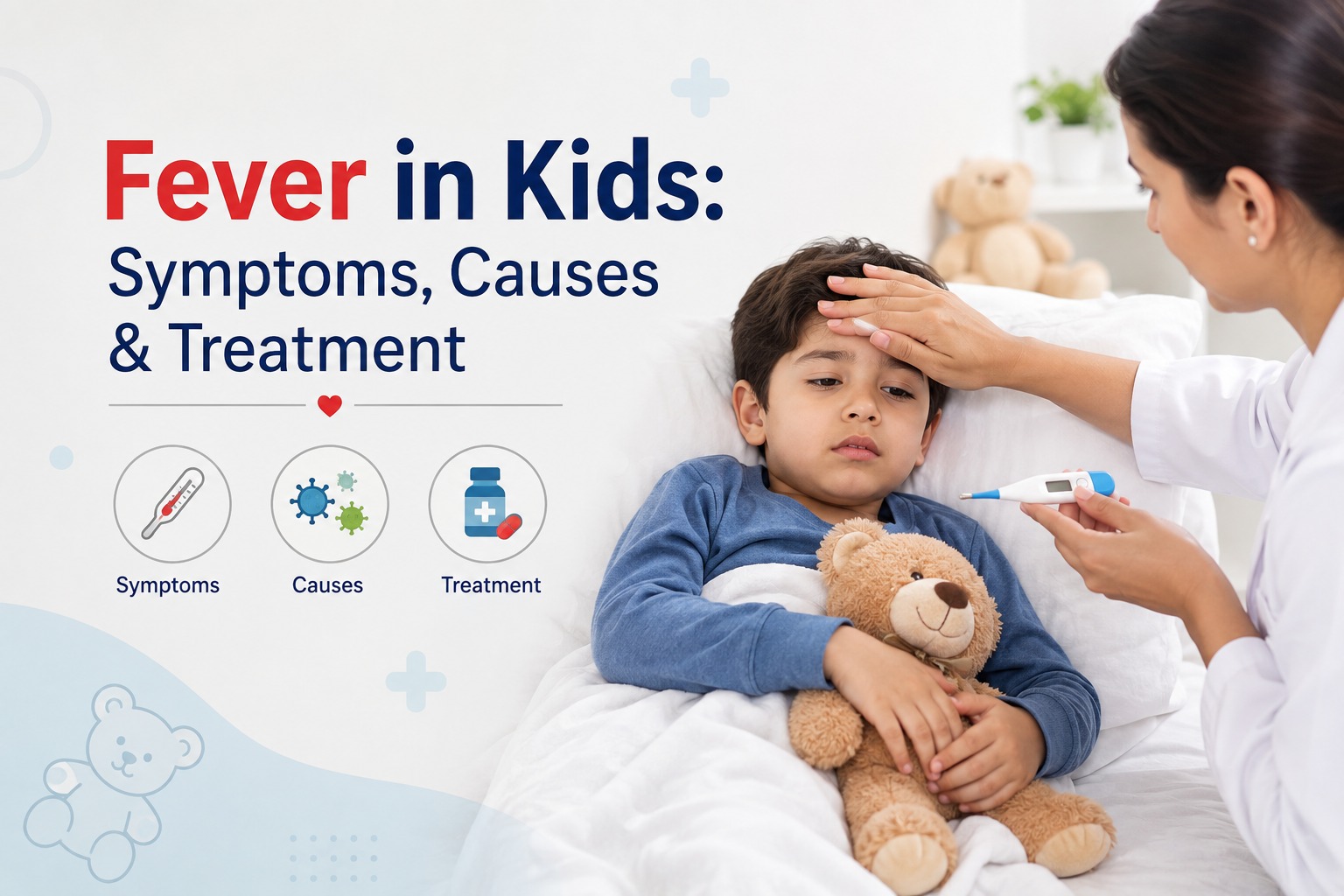
Fever in Kids: Symptoms, Causes & Treatment
Fever is one of the most common health concerns in children and is often a reason parents look for a reliable pediatrician in Noida. A fever usually indicates that the body is fighting an infection, but the cause can vary from a simple viral infection to a bacterial illness or another medical condition.
When a child develops a fever, parents may have several questions: How high is too high? Should fever medicine be given? When should a doctor be consulted? And when does a fever require urgent medical attention?
Understanding the symptoms, causes and treatment of fever in kids can help parents make informed decisions and know when professional medical care is needed. If your child has a persistent, recurrent or unexplained fever, consulting an experienced child specialist in Noida can help identify the cause and provide appropriate treatment.
What Is Fever in Kids?
Fever is a temporary increase in body temperature that commonly occurs when the immune system responds to an infection. It is a symptom rather than a disease itself. A temperature of 38°C (100.4°F) or higher is generally considered a fever.
Fever can occur in children of all ages. However, the significance of fever depends on several factors, including the child's age, temperature, duration of fever, associated symptoms and overall behaviour. For example, a child with a mild fever who is drinking fluids, responding normally and remaining reasonably active may be less concerning than a child who has a lower temperature but is extremely sleepy, dehydrated or having difficulty breathing.
This is why parents should consider the child's overall health rather than focusing only on the thermometer reading.
Common Symptoms of Fever in Children
Apart from an increased body temperature, children with fever may experience different symptoms depending on the underlying cause. Common symptoms include:
• Warm or hot skin
• Chills or shivering
• Sweating
• Tiredness or weakness
• Irritability or fussiness
• Headache
• Reduced appetite
• Body aches
• Increased sleepiness
• Cough or runny nose
• Sore throat
• Vomiting
• Diarrhoea
• Skin rash
If your child develops fever along with severe or unusual symptoms, it is important to consult a pediatric doctor in Noida for proper evaluation.
Common Causes of Fever in Kids
1. Viral Infections
Viral infections are among the most common causes of fever in children. Common cold, influenza and other viral infections may cause fever along with cough, runny nose, sore throat, body aches and tiredness. Most uncomplicated viral infections improve with adequate rest, fluids and supportive care.
2. Bacterial Infections
Some children develop fever because of bacterial infections. Ear infections, urinary tract infections, throat infections and certain respiratory infections are examples. Bacterial infections may sometimes require specific medical treatment. Parents should never start antibiotics without consulting a qualified doctor.
3. Ear and Throat Infections
Fever may occur along with ear pain, sore throat, difficulty swallowing, irritability or disturbed sleep. Children may not always be able to explain their symptoms clearly. A pediatrician can examine the child and determine whether an ear or throat infection may be responsible.
4. Stomach Infections
Fever accompanied by vomiting, loose motions, abdominal discomfort or reduced appetite can occur with gastrointestinal infections. In these cases, preventing dehydration is particularly important.
5. Urinary Tract Infection
A urinary tract infection can sometimes cause fever without obvious cold or cough symptoms. Younger children may simply become irritable, feed poorly or appear less active than usual. If a child has an unexplained fever, a child specialist in Noida may recommend an examination and, if required, appropriate tests.
6. Other Infections
Depending on the child's symptoms, age, exposure and local circumstances, fever may occasionally occur with infections such as dengue, malaria or typhoid. The cause should not be assumed based only on fever. A proper medical assessment is important when symptoms are persistent or concerning.
How to Check Your Child's Temperature
A digital thermometer is generally useful for checking a child's temperature. Follow the thermometer manufacturer's instructions for accurate measurement. Parents should avoid relying only on touching the child's forehead to determine whether they have a fever. Along with checking the temperature, observe your child's overall condition.
Ask yourself:
• Is my child alert and responsive?
• Is my child drinking enough fluids?
• Is the child urinating normally?
• Is breathing comfortable?
• Is the child unusually sleepy?
• Is there vomiting, diarrhoea or a rash?
• Does the child appear significantly different from normal?
These observations can help determine whether medical attention may be necessary.
Fever Treatment for Children
Treatment for fever depends on the underlying cause and the child's overall condition. In many mild viral infections, supportive care may be sufficient.
Keep Your Child Hydrated
Encourage your child to drink fluids regularly. Breastfed babies should generally continue breastfeeding. If your child has vomiting or diarrhoea, speak to a healthcare professional about appropriate fluid replacement.
Encourage Adequate Rest
Fever can make children tired and uncomfortable. Allow your child to get adequate rest and sleep.
Dress Your Child Comfortably
Avoid covering a feverish child with excessive clothing or heavy blankets. Comfortable, lightweight clothing is generally preferable.
Offer Food According to Appetite
Children may eat less during an illness. Offer small, easily tolerated meals and continue encouraging fluids. There is usually no need to force your child to eat.
Fever-Reducing Medicines
Fever-reducing medicines may sometimes be recommended to improve a child's comfort. Medicines such as paracetamol or ibuprofen may be appropriate for certain children, but the correct medicine and dosage depend on the child's age, weight and medical condition.
Do not give aspirin to children unless specifically advised by a healthcare professional. Parents should also avoid giving multiple fever medicines together or alternating them without medical advice, as this can increase the risk of dosing mistakes. If you are uncertain about the correct medicine or dose, consult a qualified pediatrician near you instead of guessing.
When Should You See a Pediatrician for Fever?
Many childhood fevers are mild and resolve with time. However, parents should consult a doctor when fever is persistent, recurrent or accompanied by concerning symptoms.
Consider consulting a pediatrician in Noida if your child:
• Has persistent or recurrent fever
• Is unusually sleepy or difficult to wake
• Is not drinking enough fluids
• Is passing significantly less urine
• Has repeated vomiting
• Has difficulty breathing
• Develops a concerning rash
• Has severe or worsening pain
• Has a seizure
• Appears seriously unwell
• Has symptoms that are getting worse instead of better
Parents searching online for a best pediatrician in Noida should focus not only on reviews and rankings but also on the doctor's qualifications, pediatric experience, approach to child care and availability for appropriate follow-up.
Fever in Babies: When to Be More Careful
Fever in very young babies requires particular attention. A baby younger than 3 months with a temperature of 38°C (100.4°F) or higher should receive prompt medical evaluation. Young infants may not show obvious symptoms even when they have a significant infection. Therefore, parents should not delay seeking medical advice based only on the baby's behaviour. If you are searching for a pediatrician for your baby in Noida, choose a qualified pediatric doctor who can assess infants and provide age-appropriate medical guidance.
Fever in Kids: Emergency Warning Signs
Fever requires urgent medical attention when it occurs along with serious symptoms. Seek urgent medical care if your child has:
• Difficulty breathing
• Blue or grey lips or skin
• A seizure
• Severe dehydration
• Extreme sleepiness or difficulty waking
• Stiff neck
• Severe headache
• A rapidly spreading or unusual rash
• Persistent severe vomiting
• Significant difficulty responding
• A child who appears seriously ill
In such situations, parents should not wait for the temperature to come down before seeking medical care.
Common Mistakes Parents Should Avoid During Fever
When children develop fever, parents sometimes try different home remedies or medicines without professional advice. Avoid:
• Giving antibiotics without a prescription
• Giving aspirin to children
• Giving adult medicines to children without checking suitability
• Giving repeated doses too close together
• Using ice or very cold water to reduce temperature
• Wrapping the child in heavy blankets
• Ignoring dehydration
• Delaying medical attention when the child appears seriously unwell
If you are unsure about fever treatment for children, speaking with a pediatrician can help you understand what is appropriate for your child's age and symptoms.
How to Prevent Infections in Children
It is not possible to prevent every childhood infection, but several healthy habits can reduce the risk of illness. Parents can encourage children to:
• Wash their hands regularly
• Follow recommended vaccinations
• Eat a balanced and nutritious diet
• Get adequate sleep
• Stay physically active according to their age
• Cover their mouth and nose while coughing or sneezing
• Avoid close contact with people who are actively sick
• Drink adequate fluids
• Maintain good personal hygiene
Regular pediatric check-ups can also help monitor growth, development, nutrition and overall health.
Why Choose a Pediatrician in Noida for Your Child's Fever?
Fever can have many different causes and treatment should depend on the child's individual symptoms and medical condition. An experienced pediatrician in Noida can evaluate the child's symptoms, perform an appropriate clinical examination and determine whether further investigations or treatment are needed. Parents looking for a top pediatrician in Noida should choose a doctor who provides comprehensive child healthcare rather than focusing only on treating individual symptoms.
Whether your child needs advice for fever, infections, nutrition, growth, development or preventive healthcare, establishing a relationship with a trusted child doctor in Noida can make it easier to seek timely medical guidance whenever concerns arise.
Conclusion
Fever in kids is common and is often the body's natural response to an infection. In many cases, fever improves with adequate fluids, rest and appropriate supportive care. However, parents should pay attention to the child's overall condition, not just the temperature. Difficulty breathing, dehydration, seizures, unusual sleepiness, persistent vomiting or other serious symptoms require prompt medical attention. If your child has persistent, recurrent or unexplained fever, consulting a qualified pediatrician in Noida can help identify the cause and ensure appropriate care. For parents searching for a child specialist near me in Noida, choosing a qualified pediatrician with experience in managing childhood infections and common pediatric conditions can provide reassurance and timely medical support.
FAQs
1. What temperature is considered fever in kids?
A temperature of 38°C (100.4°F) or higher is generally considered a fever in children. However, the child's age, behaviour and associated symptoms are also important.
2. How long does fever usually last in children?
The duration depends on the cause. Many viral fevers improve within a few days. If the fever persists, keeps returning or the child becomes more unwell, consult a pediatrician.
3. When should I take my child to a pediatrician for fever?
You should consult a pediatrician if the fever is persistent, recurrent or associated with symptoms such as dehydration, difficulty breathing, unusual sleepiness, repeated vomiting, seizures or a concerning rash.
4. Can I give antibiotics to my child for fever?
No. Antibiotics do not treat viral infections and should only be given when recommended by a healthcare professional for an appropriate bacterial infection.
5. Is fever dangerous for babies?
Fever in very young babies requires special attention. A baby under 3 months with a temperature of 38°C (100.4°F) or higher should receive prompt medical evaluation.
6. How can I find a good pediatrician in Noida for my child?
When choosing a pediatrician in Noida, consider the doctor's pediatric qualifications, experience, approach to child healthcare, clinic accessibility and ability to provide appropriate follow-up care.